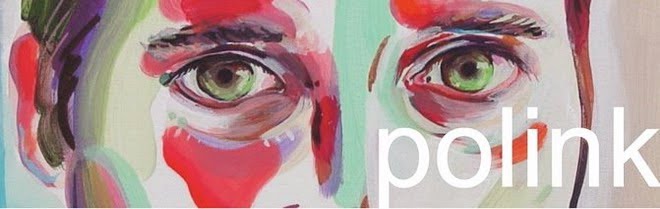
I painted this portrait of activist Marisela Escobedo at the beginning of 2011. Today one year after being killed there is news that her killer has been found.
I thought then that the press and people's attention and indignation was going to help stop the killings. But no, human right activists are now even a bigger target than one year ago. Let's not forget.
Showing posts with label Mexico. Show all posts
15 December 2011
18 July 2011
Mexico meets Berlin
![]() |
| Iván Abreu |
![]() |
| Marisa Polin |
![]() |
| Heriberto Quesnel |
A group exhibition of five Mexican artists at EMERSON Gallery in Berlin:
Iván Abreu, Vanessa Farfán, Lucero Hernández, Marisa Polin, Heriberto Quesnel.
Opening: 22.07.11 7pm
Exhibition: 23.07.2011 - 04. 09.2011
Tuesday -Friday 2 -7 pm.
-Iván Abreu (La Habana Cuba 1967). Video, drawings, performance.
Iván Abreu's work articulates art, design and technology by using multiple media such as electronic devices, software development, sound experimentation, Internet, industrial design, documents, video and photography. For Abreu the use of technology as an artistic strategy allows the coupling of situations that were not designed to operate together to create singular effects. Technology activates these unions in art that in referencing social and political, transforms relations from cause and effect to cause and consequence.
-Vanessa Farfán (Mexico City 1977). Painting, installation.
Using different media as paint, threats, fabric and objects, her works show the result of situations created by intention or by accident. Structured spaces are transgressed by the movement of the elements which live in there. For Farfán, the relation space+time=movement is an important formula in her work.
-Lucero Hernández (Jalisco, México 1980). Installation, performance.
The women's murders in Ciudad Juárez, the role of the women in the Mexican society and the cultural shock are the topics of Lucero's work. In her performances, Hernández takes part of the Mexican everyday life and she places it out of context,making the meaning of this "Mexican situations" stronger.
-Marisa Polin (Mexico City 1965). Painting.
Images from newspapers and publications are reinterpreted in paintings. The work of Polin makes a synthesis of the weak and strong points of contemporary Mexico, always with a critical point of view.
-Heriberto Quesnel (Mexico City 1971). Painting, collage.
Critic of the social behavior through the cultures , Heriberto uses humor to point out the terrifying situations
of the political and social structures nowadays. He uses commercial, social, cultural or political icons to play around the context and the meaning of them.
EMERSON Gallery
Gartenstr. 1, 10115 Berlin / (030) 24 04 72 95 /
info@emersongallery.de / http://www.emerson-gallery.de/
Tue-Fr 2 - 7 pm
Opening: 22.07.11 7pm
Exhibition: 23.07.2011 - 04. 09.2011
Tuesday -Friday 2 -7 pm.
-Iván Abreu (La Habana Cuba 1967). Video, drawings, performance.
Iván Abreu's work articulates art, design and technology by using multiple media such as electronic devices, software development, sound experimentation, Internet, industrial design, documents, video and photography. For Abreu the use of technology as an artistic strategy allows the coupling of situations that were not designed to operate together to create singular effects. Technology activates these unions in art that in referencing social and political, transforms relations from cause and effect to cause and consequence.
-Vanessa Farfán (Mexico City 1977). Painting, installation.
Using different media as paint, threats, fabric and objects, her works show the result of situations created by intention or by accident. Structured spaces are transgressed by the movement of the elements which live in there. For Farfán, the relation space+time=movement is an important formula in her work.
-Lucero Hernández (Jalisco, México 1980). Installation, performance.
The women's murders in Ciudad Juárez, the role of the women in the Mexican society and the cultural shock are the topics of Lucero's work. In her performances, Hernández takes part of the Mexican everyday life and she places it out of context,making the meaning of this "Mexican situations" stronger.
-Marisa Polin (Mexico City 1965). Painting.
Images from newspapers and publications are reinterpreted in paintings. The work of Polin makes a synthesis of the weak and strong points of contemporary Mexico, always with a critical point of view.
-Heriberto Quesnel (Mexico City 1971). Painting, collage.
Critic of the social behavior through the cultures , Heriberto uses humor to point out the terrifying situations
of the political and social structures nowadays. He uses commercial, social, cultural or political icons to play around the context and the meaning of them.
EMERSON Gallery
Gartenstr. 1, 10115 Berlin / (030) 24 04 72 95 /
info@emersongallery.de / http://www.emerson-gallery.de/
Tue-Fr 2 - 7 pm
Do you want to see my working studio? Trendbeheer.
26 March 2011
Orozco at the Tate
![]() |
| My only photo of the exhibition. |
The work that impressed me the most is the one with the intriguing obituaries taken from the newspaper. The exhibition has a few more weeks to go.
25 March 2011
Ambition
![]() | ||
| Ambition. (Monica Pretelini, the candidate's wife). 2011©Marisa Polin My last painting, based on Mexico State's governor Enrique Peña Nieto's wife who died 4 years ago. |
14 March 2011
The Hope leaves Mexico
![]() |
| La Esperanza de Praxedis, 2010, Marisa Polin |
Marisol Valles García leaves Praxedis G. Guerrero, near Ciudad Juárez after five months as Police Chief asking political asylum in the United States.
10 January 2011
09 January 2011
What is a narco message?
![]() |
| We keep our word (Somos de Palabra), 2011, Marisa Polin |
Here two paintings I am working on, still fresh, based on the different messages that drug dealers and criminals leave not only for their enemies but also for the press, the politicians and the public.
They reflect their mean minds and also a lot about their own background.
![]() |
| Grenade, 2011, Marisa Polin |
28 December 2010
24 December 2010
Drugs culture kidnaps the fine arts
![]() |
| El Economista, image El Jefe by M.Polin |
This article talks about the influence of the Mexican Drugs War in the arts, days after the "official" release of the ex-presidential candidate and lawyer Diego Fernandez de Cevallos. He was kidnapped for 7 months. This information is in part what the title of the article by Vicente Gutierrez from El Economista is refering to. The image of the article is my painting El Jefe based on the photo made of Fernandez de Cevallos by his kidnappers.
![]() | ||||||||
The narco kidnaps the fine arts
Vicente Gutiérrez / El Economista, Mexico / 22 December 2010
Film, theater, art installations, music, novels, art and television series are inspired by drug trafficking and violence in Mexico to create works of art. But the narco goes beyond the social phenomenon that causes the lifestyles of drug dealers, that many that many young people copy in their dream to be rich like them. Increasingly, the artists take the drugs world as a theme to create.
"It is impossible to ignore the horror that exists in many cities, borders and roads of the country and this affects all activities or people," said the writer Martin Solares.
"In Mexico's artists have begun to reflect on their creations the increasing daily violence or the presence of drug traffickers. Even in the Mexican poems and novels occasionally appears a testament to the violence! "He said. After the federal government declared war on drug trafficking, the issue has been more present than ever in the Fine Arts and has become the "tough" face of Mexico in the world. Just remember that for the 53 Venice Biennale, the artist Teresa Margolles showed an installation of a room soaked with blood and debris of various murders and had jewelry made with scrap from the drugs war.
The art curator Cuauhtémoc Medina explained that "jewelry made from fragments of windshield glass, embroidered in gold on blood and sound recordings of the landscapes of death aphorisms murderers, they all converge to produce a space for reflection, physical threat and anxiety."
Or what the artist Marisa Polin did in The Netherlands, who intervened a picture of Diego Fernandez de Cevallos blindfolded. Although this was the most innocent part of the exhibition where executions, beheaded, tortured and kidnapped were shown in her drawings and paintings that raised a lot of noise.
What about El Infierno / The Hell, Luis Estrada film which grossed 83 million 82 thousand 542 pesos to register as the second highest grossing film in Mexican cinema in 2010 which tells the story of an ordinary man who ends up as a drug trafficker.
etcetera...
"It is impossible to ignore the horror that exists in many cities, borders and roads of the country and this affects all activities or people," said the writer Martin Solares.
"In Mexico's artists have begun to reflect on their creations the increasing daily violence or the presence of drug traffickers. Even in the Mexican poems and novels occasionally appears a testament to the violence! "He said. After the federal government declared war on drug trafficking, the issue has been more present than ever in the Fine Arts and has become the "tough" face of Mexico in the world. Just remember that for the 53 Venice Biennale, the artist Teresa Margolles showed an installation of a room soaked with blood and debris of various murders and had jewelry made with scrap from the drugs war.
The art curator Cuauhtémoc Medina explained that "jewelry made from fragments of windshield glass, embroidered in gold on blood and sound recordings of the landscapes of death aphorisms murderers, they all converge to produce a space for reflection, physical threat and anxiety."
Or what the artist Marisa Polin did in The Netherlands, who intervened a picture of Diego Fernandez de Cevallos blindfolded. Although this was the most innocent part of the exhibition where executions, beheaded, tortured and kidnapped were shown in her drawings and paintings that raised a lot of noise.
What about El Infierno / The Hell, Luis Estrada film which grossed 83 million 82 thousand 542 pesos to register as the second highest grossing film in Mexican cinema in 2010 which tells the story of an ordinary man who ends up as a drug trafficker.
etcetera...
Excerpto en Español de: La narcocultura secuestra las bellas artes
Vicente Gutiérrez / El Economista, Mexico / 22 December 2010
Cine, obras de teatro, instalaciones de arte, música, novelas, artes plásticas y series de televisión se inspiran en el narcotráfico y la violencia en México para crear obras artísticas.
Pero la narcocultura va más allá del fenómeno social que provoca el estilo de vida de los narcotraficantes, ése que muchos jóvenes copian en su sueño por ser ricos como ellos.
Cada vez más, los artistas toman el narco como materia para crear.
“Es imposible ignorar el horror que se vive en tantas ciudades, fronteras o carreteras del país y esto afecta a todas las actividades o personas”, explicó el escritor Martín Solares.
“En México los artistas más exquisitos y solipsistas han comenzado a reflejar en sus creaciones el aumento de la violencia cotidiana o la presencia de los narcotraficantes. ¡Hasta en los poemas y en las novelas de ciencia ficción mexicanas aparece de vez en cuando un testimonio de la violencia!”, agregó. Después de que el gobierno federal declaró la guerra al narcotráfico, el tema ha estado más presente que nunca en las Bellas Artes y se ha convertido en el rostro “duro” de México en el mundo. Basta recordar que para la 53 Bienal de Venecia, la artista Teresa Margolles presentó instalaciones sobre el narco con una habitación empapada con sangre, residuos de distintos asesinatos y joyas hechas con desechos de la guerra del narcotráfico.
El curador de arte Cuauhtémoc Medina explicó que “joyas hechas con fragmentos de parabrisas, aforismos asesinos bordados en oro sobre sangre, sonidos grabados en los paisajes de la muerte, todos ellos convergen para producir un espacio de reflexión, amenaza corporal y ansiedad”.
O lo que hizo en Holanda la artista plástica Marisa Polin quien intervino una foto de Diego Fernández de Cevallos con los ojos vendados, aunque es la pieza más inocente de la exposición ante los ejecutados, decapitados, torturados y secuestrados que aparecen en sus dibujos y pinturas que levantaron mucho ruido.
Qué decir de El Infierno, película de Luis Estrada que recaudó 83 millones 82 mil 542 pesos para colocarse como la segunda cinta más taquillera del cine mexicano en el 2010 donde relata la historia de un hombre común que acaba como narcotraficante.
12 December 2010
30 works in 30 days
Demián Ortega takes The Curve of the Barbican by surprise. 30 works made on a selection of news in the month September 2010. He selected and reacted to the newspaper news with one installation or sculpture per day.
The chairs photo comes from the facebook page of the Barbican as half way the exhibition I was asked not to take photographs. Why not?
![]() | |
|
![]() |
| as soon as you see the photo from Barbican FB page. |
Labels:
art,
installation,
Mexico,
sculpture
08 December 2010
22 October 2010
Violence in art
Here some examples of artists that have used today's violence in Mexico as theme for their art work:
Rosa Maria Roble: Expo 2007, CAC Wilfredo Lam, Cuba 2010, more

Rosa Maria Roble: Expo 2007, CAC Wilfredo Lam, Cuba 2010, more

Gustavo Monroy, (also), Omar Rodríguez-Graham and Lenin Márquez Salazar at Museo de Arte Moderno, Mexico City 2010


Teresa Margolles, Venice Biennale 2009
And some reading, the new book Miss Narco by Javier Valdez
12 October 2010
11 October 2010
The Mexican State... of the art
An interpretation:
The Mexican state... of the art
by Leopoldo Mendivil at La Cronica de Hoy
Excerpt:
"... The four years minus 50 days that had passed of your mandate cover already an era of Mexico, President, because of all that has happened during that time. It occurs often that the last step in the construction of an era is the manifestation of its art, which reaches its climax to make account of all that has happened.
This has happened already with your government. Yesterday, the weekly magazine Proceso published an exclusive, I think a world exclusive. The Mexican artist Marisa Polin presented her point of view inspired by the theme of our drug violence with the painting exhibition (Not) Guilty in Delft, The Netherlands, on 12 September, just in time to coincide with the epic date of our history.
At the opening of the exhibition the main canvas was not yet finished, a vision of hard paint strokes of Diego Fernandez de Cevallos from his captivity.
This paradoxical image of The Boss, as the work is called, will undoubtedly be the most famous of his posterity.
As The Boss is so vain, he will certainly thank you, President, having caused that image for the times when he will be only history, heritage, memories, dust, and at the most, ashes ... "
Español:
El Estado Mexicano… del arte
Leopoldo Mendívil de La Cronica de Hoy
Excerpto:
"...Los cuatro años menos 50 días que han transcurrido de su mandato abarcan ya una era del tiempo mexicano, Presidente, por todo lo que durante ellos ha ocurrido. Suele suceder que el último peldaño en la construcción de una era sea la manifestación de su arte, que llega a su plenitud para hacer el recuento de lo realizado.
Así ha ocurrido ya con su gobierno. Ayer, la revista semanal Proceso publicó la exclusiva, creo que mundial, de su visión pictórica en la exposición titulada (No) Culpable que el 12 de septiembre, a tiempo para coincidir con la fecha épica de nuestra historia, la mexicana Marisa Polin presentó en la ciudad de Delft, Holanda, inspirada en el tema de nuestra narcoviolencia.
Al abrirse la exposición aún no estaba concluido el lienzo principal, una visión de duros trazos de Diego Fernández de Cevallos desde su cautiverio.
Paradójica imagen esta de El Jefe –como se denomina la obra–, que sin duda será la más famosa de su posteridad.
Como El Jefe es tan vanidoso, sin duda le agradecerá, Presidente, haber provocado esa imagen para cuando ya sólo sea historia, herencia, recuerdo, polvo, si mucho, cenizas…"
The Mexican state... of the art
by Leopoldo Mendivil at La Cronica de Hoy
Excerpt:
"... The four years minus 50 days that had passed of your mandate cover already an era of Mexico, President, because of all that has happened during that time. It occurs often that the last step in the construction of an era is the manifestation of its art, which reaches its climax to make account of all that has happened.
This has happened already with your government. Yesterday, the weekly magazine Proceso published an exclusive, I think a world exclusive. The Mexican artist Marisa Polin presented her point of view inspired by the theme of our drug violence with the painting exhibition (Not) Guilty in Delft, The Netherlands, on 12 September, just in time to coincide with the epic date of our history.
At the opening of the exhibition the main canvas was not yet finished, a vision of hard paint strokes of Diego Fernandez de Cevallos from his captivity.
This paradoxical image of The Boss, as the work is called, will undoubtedly be the most famous of his posterity.
As The Boss is so vain, he will certainly thank you, President, having caused that image for the times when he will be only history, heritage, memories, dust, and at the most, ashes ... "
Español:
El Estado Mexicano… del arte
Leopoldo Mendívil de La Cronica de Hoy
Excerpto:
"...Los cuatro años menos 50 días que han transcurrido de su mandato abarcan ya una era del tiempo mexicano, Presidente, por todo lo que durante ellos ha ocurrido. Suele suceder que el último peldaño en la construcción de una era sea la manifestación de su arte, que llega a su plenitud para hacer el recuento de lo realizado.
Así ha ocurrido ya con su gobierno. Ayer, la revista semanal Proceso publicó la exclusiva, creo que mundial, de su visión pictórica en la exposición titulada (No) Culpable que el 12 de septiembre, a tiempo para coincidir con la fecha épica de nuestra historia, la mexicana Marisa Polin presentó en la ciudad de Delft, Holanda, inspirada en el tema de nuestra narcoviolencia.
Al abrirse la exposición aún no estaba concluido el lienzo principal, una visión de duros trazos de Diego Fernández de Cevallos desde su cautiverio.
Paradójica imagen esta de El Jefe –como se denomina la obra–, que sin duda será la más famosa de su posteridad.
Como El Jefe es tan vanidoso, sin duda le agradecerá, Presidente, haber provocado esa imagen para cuando ya sólo sea historia, herencia, recuerdo, polvo, si mucho, cenizas…"
06 October 2010
Photo gallery at Milenio
English

Spanish

Click on the photos.
The Mexican newspaper and website Milenio.com shows a photo gallery om my last paintngs. They write their own photo texts to my series (Not) Guilty, except when they uncorrectly mention where the exhibition is being shown: It is at WAD in Delft until 17 of October 2010.

Spanish

Click on the photos.
The Mexican newspaper and website Milenio.com shows a photo gallery om my last paintngs. They write their own photo texts to my series (Not) Guilty, except when they uncorrectly mention where the exhibition is being shown: It is at WAD in Delft until 17 of October 2010.
I posted yesterday the photo of the just finished painting The Boss (El Jefe), just in time to be published at its final state.
They also write that the painting Z is about a member of The Zetas gang, which for me it was actually someone punished BY The Zetas. Who is right?
05 October 2010
Car Art
Betsabeé Romero at the Troprenmuseum in Amsterdam.
All about cars and wheels.


A Mara inspired 'tattooed' Volkswagen 'Bocho', with help of Henk Schifmacher and other artists.

Her oldest car art work from 1997.

The longest line of coke?

The artist Betsabeé Romero

interviewed by art critic Hans den Hartog Jager.
All about cars and wheels.


A Mara inspired 'tattooed' Volkswagen 'Bocho', with help of Henk Schifmacher and other artists.

Her oldest car art work from 1997.

The longest line of coke?

The artist Betsabeé Romero

interviewed by art critic Hans den Hartog Jager.
Labels:
art,
faces in art,
Mexico,
sculpture
29 September 2010
Commemoration of what?

The date finally arrived. It is 200 years ago of the insurgent call from a 'criollo' priest in a very small town in then New Spain (today Mexico) to rebel against the Spanish Crown. And the rest is history, we could say. But it is not. It took more a decade of inner fights and countless dead, including priest Hidalgo's dead, until the criollos -or children of Spaniards born in the new land- with help of the Indians declared the Independence from Spain. Still a few more years before the international community recognized this fact.

This Independence didn't mean a better life for the mayority of inhabitants of the new land. 200 years, many other wars, guerrillas, revolutions, rebellions and political systems and the situation of big part of population is not much better than then, except mainly for those descendants from the criollos.
Isn't now a good moment to make a real change and to be fair to the whole population?

In the mean time these are a photos taken on the commemoration day at the huge Richard Meijer's Atrium of the City Hall of The Hague.


22 September 2010
20 September 2010
13 September 2010
What am I talking about?

I just found this photograph at Daniel Hernandez blog, and it is another way of saying what on my new paintings I am trying to say. The origin of the horrible drugs war in Mexico is the poverty and absence of hope.
Subscribe to:
Posts (Atom)